
Sales has the order. The shop floor doesn’t.
Orders move through chat. Sales can’t see production progress. When a customer pushes, the team squeezes in the job and the delivery date slips again.
From order intake to payment, one platform runs the plant
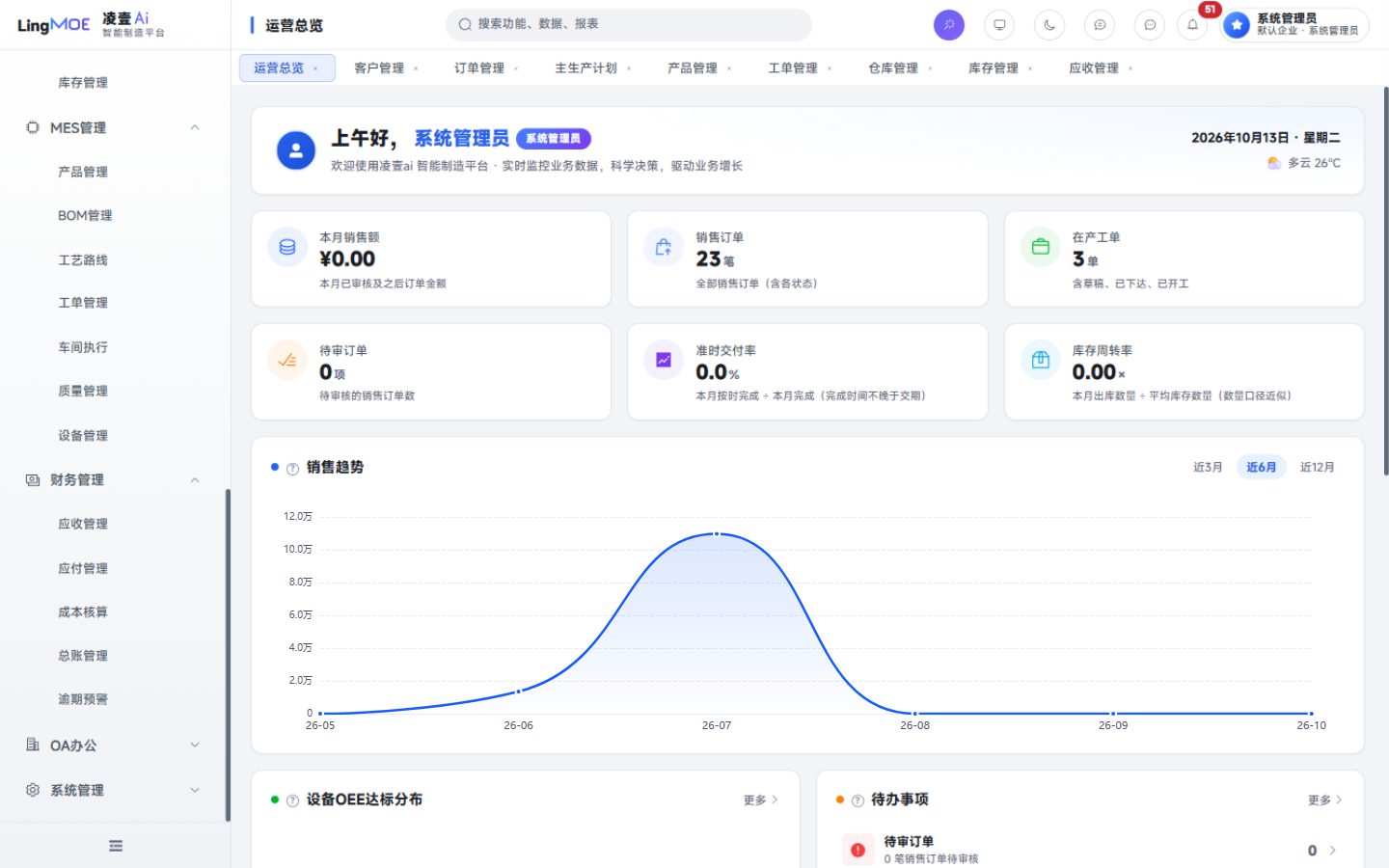
Orders, inventory, production, quality, and cost stay in sync in one system. AI joins planning, anomaly alerts, and business analysis, so exceptions surface early and progress is always visible.
01 — Factory pain points
Too many tools, and the numbers still don’t match. How many of these sound familiar?
Orders move through chat. Sales can’t see production progress. When a customer pushes, the team squeezes in the job and the delivery date slips again.
How much material was bought, how much is left, whether it’s enough — all tracked in spreadsheets and memory. The result is either excess stock or a line stopped for want of parts.
When a customer complains, you can’t trace the material lot, shift, or machine. The whole batch gets recalled, and the cost is severe.
Material, labor, and overhead aren’t allocated clearly. Which orders make money and which lose it is a guess, so decisions rest on instinct.
Not three systems exporting files to each other — one account, one data set, one business chain.
How to budget? Read ERP, MES, and OA budgets and hidden costs.
Same factory, same team, different throughput.
02 — End-to-end flow
Each step hands off to the next and data syncs in real time. No re-keying.
Once sales enters the order, the system creates the production plan and purchase list. No chasing.
No walk to the floor, no phone calls. Open your phone.
03 — Quality traceability
From incoming material to finished goods, the whole chain is traceable. When something goes wrong, find it fast.
How to calculate ROI and acceptance for AI visual inspection? Read “Is AI quality inspection worth it?”.
30+ core modules adapt to each industry’s processes and forms.
Run your own process at moe.czlytech.com first. If you want, we’ll bring a plan to your site.